In today’s tech-driven world, picking the right DC power supply is really key if you want good efficiency and top performance. I mean, reports from Frost & Sullivan suggest that the global market for power supplies is expected to hit around $28.2 billion by 2024—that’s a massive jump and clearly shows how much demand there is for reliable, efficient DC power solutions. But here’s the thing: with so many different applications out there, finding the perfect fit can get pretty tricky because each one has its own specific needs.
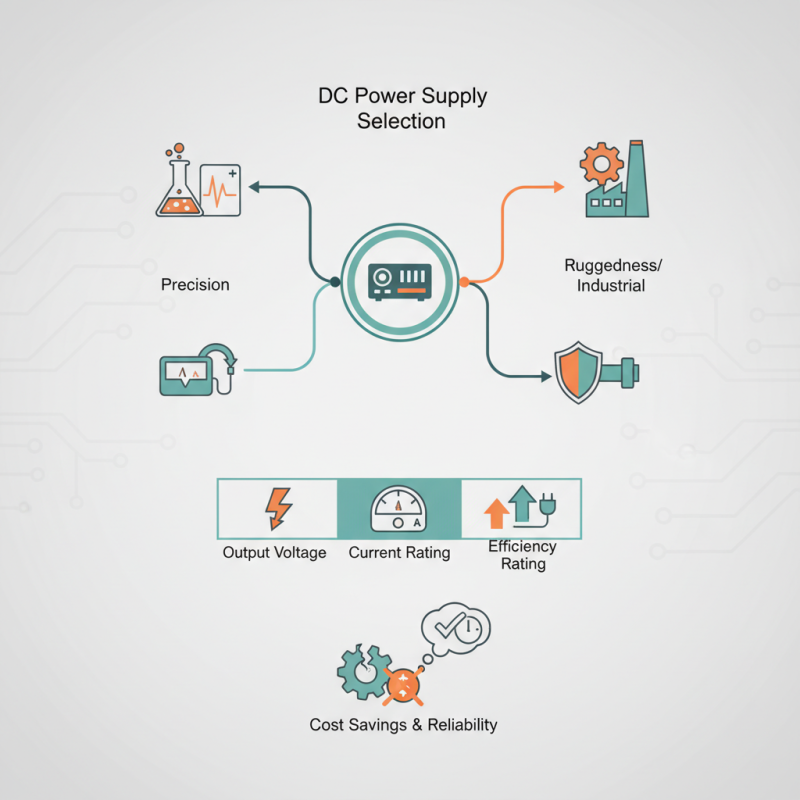
Knowing what your project actually needs is super important. For example, in a lab setting, you’d probably want a super precise DC power supply, while in an industrial environment, durability and long-term reliability might be more critical. Companies like Mean Well and TDK Lambda have really made a name for themselves because they understand these different needs and deliver accordingly. That said, if you pick the wrong model, it could lead to stuff breaking down or just not working as efficiently as it should.
Not every product out there is built the same either—some are solid, others not so much. That inconsistency can totally throw you off, right? So, it’s really important to pay close attention to specs—things like output voltage, current ratings, and efficiency. There are tons of options, but taking the time to find the right one for your particular needs will actually save you time and cash in the long run. Bottom line: being careful and thoughtful about your choice makes all the difference.
Understanding the Basics of DC Power Supplies
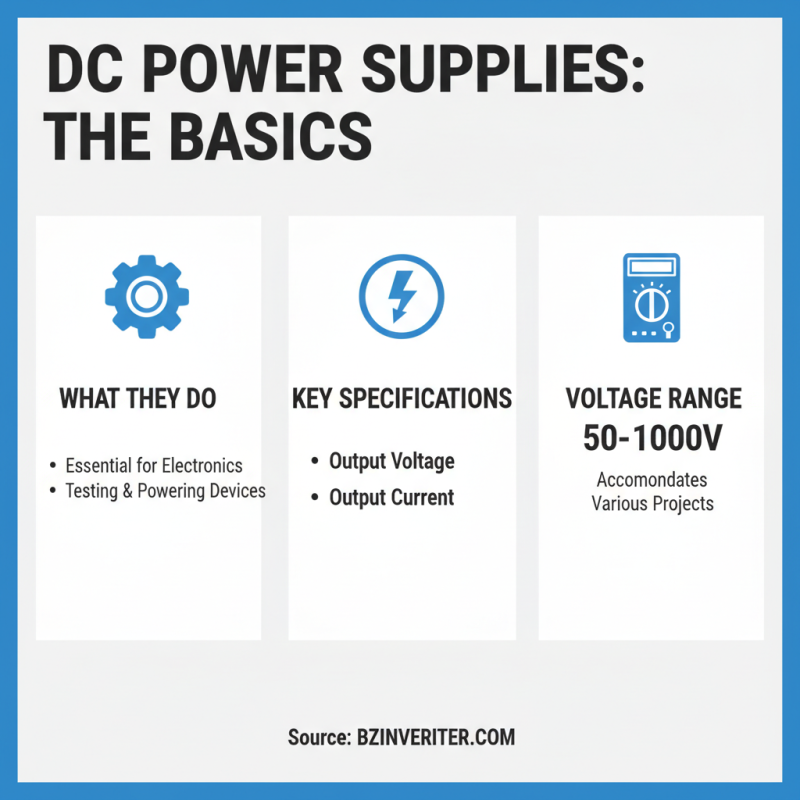
When selecting a DC power supply, understanding the basics can make a significant difference. DC power supplies are essential for various applications, from testing electronic circuits to powering devices. The output voltage and current are crucial specifications to consider. A range of 50-1000V DC power supply can accommodate many projects, ensuring sufficient power for your needs.
Different types of DC power supplies exist. Linear supplies are known for their simplicity and low noise but can be bulky. Switch-mode power supplies, on the other hand, are more efficient and compact. However, they may introduce ripple into the output, which could be problematic in sensitive applications. Analyzing the specific requirements of your project is necessary before choosing.
Consider the environment in which you will use the power supply. Heat dissipation and humidity levels can impact performance. Overlooking these factors might lead to insufficient power delivery or equipment damage. Reflecting on these elements ensures you select a power supply that fits your needs. Each decision shapes how effectively your project performs, highlighting the importance of careful evaluation.
Identifying Your Power Requirements: Voltage and Current Specifications
When selecting a DC power supply, understanding your voltage and current requirements is crucial. Voltage levels can significantly affect the performance of your electronic devices. Digital circuits may demand specific voltages, often between 3.3V to 12V. However, some applications, like motors, may require voltages as high as 24V or even 48V. According to industry studies, approximately 65% of equipment failures arise from incorrect voltage settings.
Current specifications are equally important. Devices often have peak current and average current requirements. For instance, a microcontroller may need just a few milliamps, while larger devices could demand several amperes during startup. A mismatch in these specifications can lead to inefficiencies or equipment damage. A survey from Power Electronics Magazine indicates that choosing the right current rating can improve system reliability by over 40%.
Tips:Always double-check the power rating of your devices. Consult technical datasheets or user manuals for accurate figures. In complex setUPS, consider using a power supply with adjustable voltage and current settings. This flexibility can enhance compatibility across multiple devices. Be cautious of labeling; some power supplies may advertise nominal output but can fluctuate under load conditions. Assessing both voltage and current needs ensures optimal performance and longevity for your electronic solutions.
Evaluating Load Types: Linear vs. Switching Power Supplies
When selecting a DC power supply, understanding the differences between linear and switching power supplies is crucial. Linear power supplies provide a stable voltage output and are less affected by load variations. They are often favored for sensitive applications, such as audio equipment. However, they can be bulky and generate significant heat, impacting their efficiency.
On the other hand, switching power supplies are more compact and efficient. They convert power by switching on and off rapidly, minimizing heat generation. This makes them suitable for high-power applications and portable devices. Yet, they may introduce noise and ripple in the output, which could affect sensitive circuits. The choice between these two types often hinges on the specific needs of your application.
Evaluating your load types can be challenging. Consider whether your devices require consistent voltage or can tolerate fluctuations. Also, reflect on space and efficiency requirements. Some users find themselves frustrated by noise issues with switching supplies, while others struggle to manage the size and cost of linear supplies. Ultimately, the decision should be based on performance needs and practical limitations. It's essential to assess your priorities carefully before making a choice.
Consideration of Features: Adjustable Outputs and Programmability
When selecting a DC power supply, adjustable outputs and programmability become crucial features. An adjustable output allows users to change voltage and current levels. This flexibility is essential for different applications, from testing circuits to powering devices. A study from the Institute of Electrical and Electronics Engineers indicates that over 75% of engineers prefer adjustable power supplies for their projects.
Programmability is another significant feature. It enables users to set specific voltage and current levels through software. This capability helps in automation and reduces errors. According to a market report by Grand View Research, the programmable DC power supply market is expected to grow significantly, highlighting its increasing importance in various industries. Programmable options can save time during lengthy testing phases.
However, it's essential to consider the complexity that programmability introduces. Many users may find programming intimidating. Even basic features can sometimes overwhelm new users. An intuitive interface can significantly enhance usability. A well-designed interface bridges the gap between user expectations and actual experience. Balancing power supply features with ease of use is key. Ultimately, choosing the right Power Supply Converter requires careful consideration of these factors.
Assessing the Quality: Ripple, Noise, and Efficiency Ratings
When choosing a DC power supply, assessing quality is vital. Ripple, noise, and efficiency ratings play substantial roles in performance. Ripple is the residual periodic variation in DC voltage. A low ripple percentage indicates a cleaner output. Ideally, aim for a ripple voltage of less than 1% of the total output voltage. Reports show that supplies with a ripple of less than 0.5% significantly improve circuit stability.
Noise refers to the unwanted variations in voltage that can interfere with sensitive electronic components. Effective filtering is key to reducing noise levels. Standards suggest that noise should be lower than 50 mV peak-to-peak for optimal performance. High noise levels can disrupt operations, leading to malfunctioning devices. Ensuring a low noise profile will enhance the reliability of your power system.
Efficiency ratings are critical in today's energy-conscious landscape. A high-efficiency rating means less energy waste and reduced operational costs. Look for supplies with an efficiency of at least 90%. This ensures optimal power delivery. Additionally, consider advanced technologies like the Battery-less Off-Grid Energy Storage Inverter. Such systems optimize efficiency and performance, delivering stable power even in varying conditions. As you assess these factors, reflect on your specific requirements to find the best solution for your applications.
Budgeting for Your Needs: Cost vs. Performance Trade-offs
When selecting a DC power supply, budget considerations are crucial. Performance and cost often conflict. Balancing these two aspects can be challenging. You'll want a reliable power source without breaking the bank. Understanding your specific needs is essential for effective budgeting.
Tips: Identify your maximum power requirement early. This avoids overpaying for unnecessary capacity. It's also wise to consider future expansion. Investing a bit more now can save costs later. Be cautious about features that sound fancy but aren't necessary for your applications.
While lower-priced options may appear appealing, they can compromise performance.
Cheaper models may have less stability or a shorter lifespan. These choices could lead to issues down the line.
Reliability in a DC power supply is not negotiable, especially in critical applications. Delving into user reviews and technical specifications can provide helpful insights.
Researching Manufacturers and Product Reviews for Reliability
When researching manufacturers and product reviews, reliability is key. Start by exploring trusted sources. Look for expert reviews and user feedback. These insights reveal how products perform under real-life conditions. Check the specifications carefully. Power stability, voltage range, and current output are vital for your applications.
Consider the reputation of manufacturers. Established companies often emphasize quality and customer service. Visit forums and online communities. Users share their experiences, giving you a glimpse into reliability issues. Look for patterns in feedback. If multiple users are unhappy about a specific model, take note. Switching Power Supply models can vary in performance.
It’s essential to reflect on your specific needs. Are your requirements basic or advanced? Sometimes, a high-end model may not be necessary. Weigh the cost against the expected performance. Reliability often comes with a price, but not always. Analyzing reviews and understanding product features can help you choose wisely. Make informed decisions by relying on thorough research.
DC Power Supply Ratings
The Ultimate Guide to Constant Current Constant Power Rapid Chargers: Features, Benefits, and Top Picks
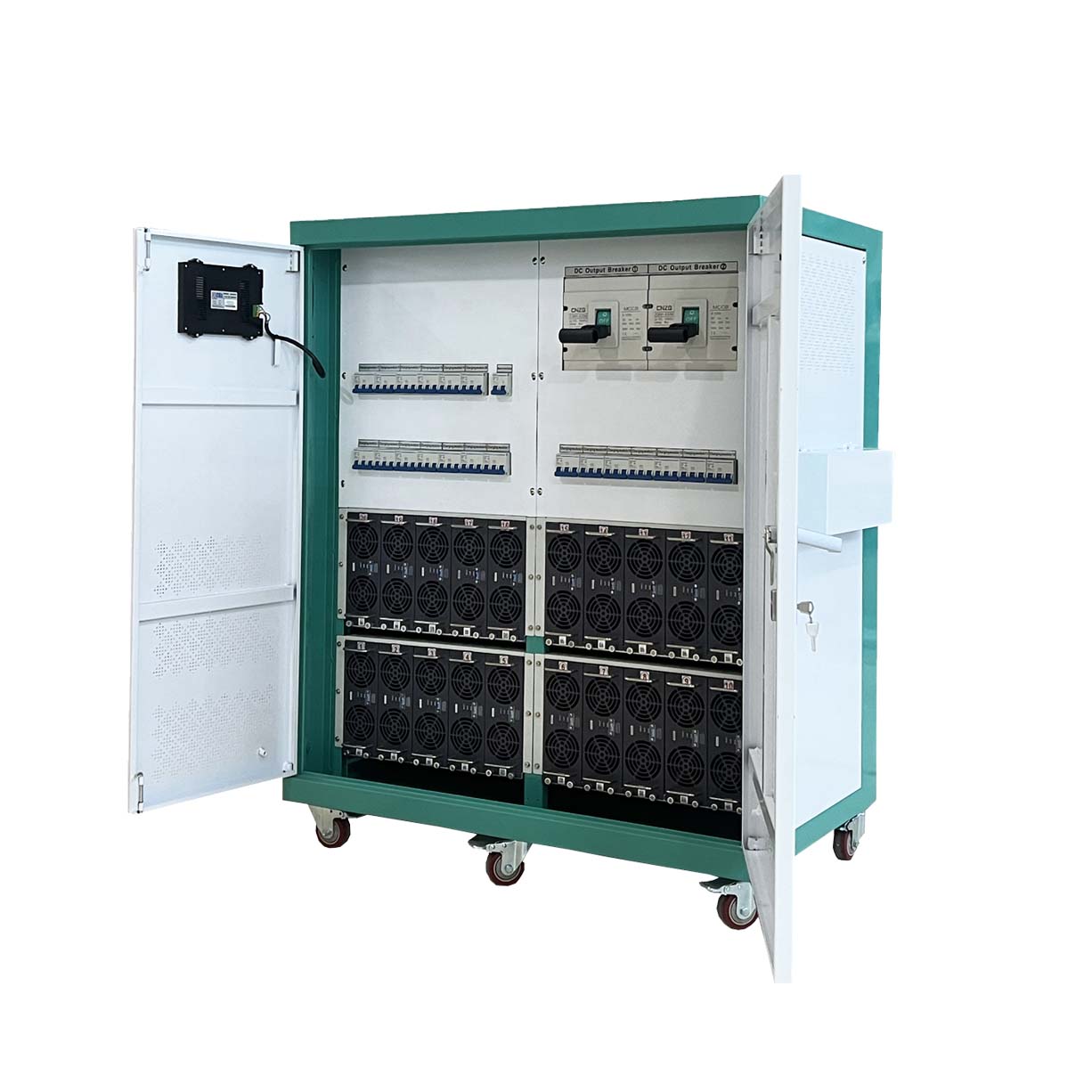
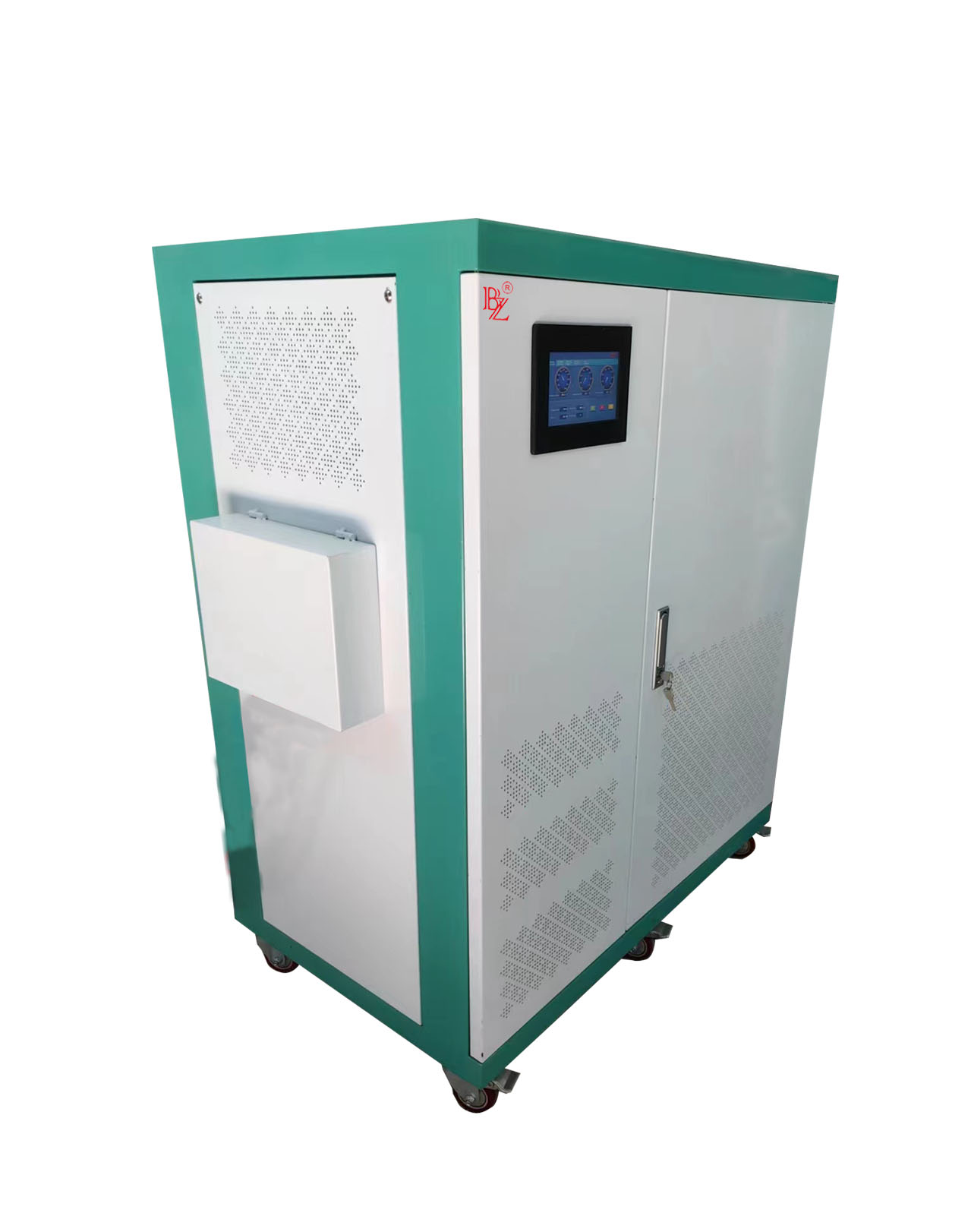
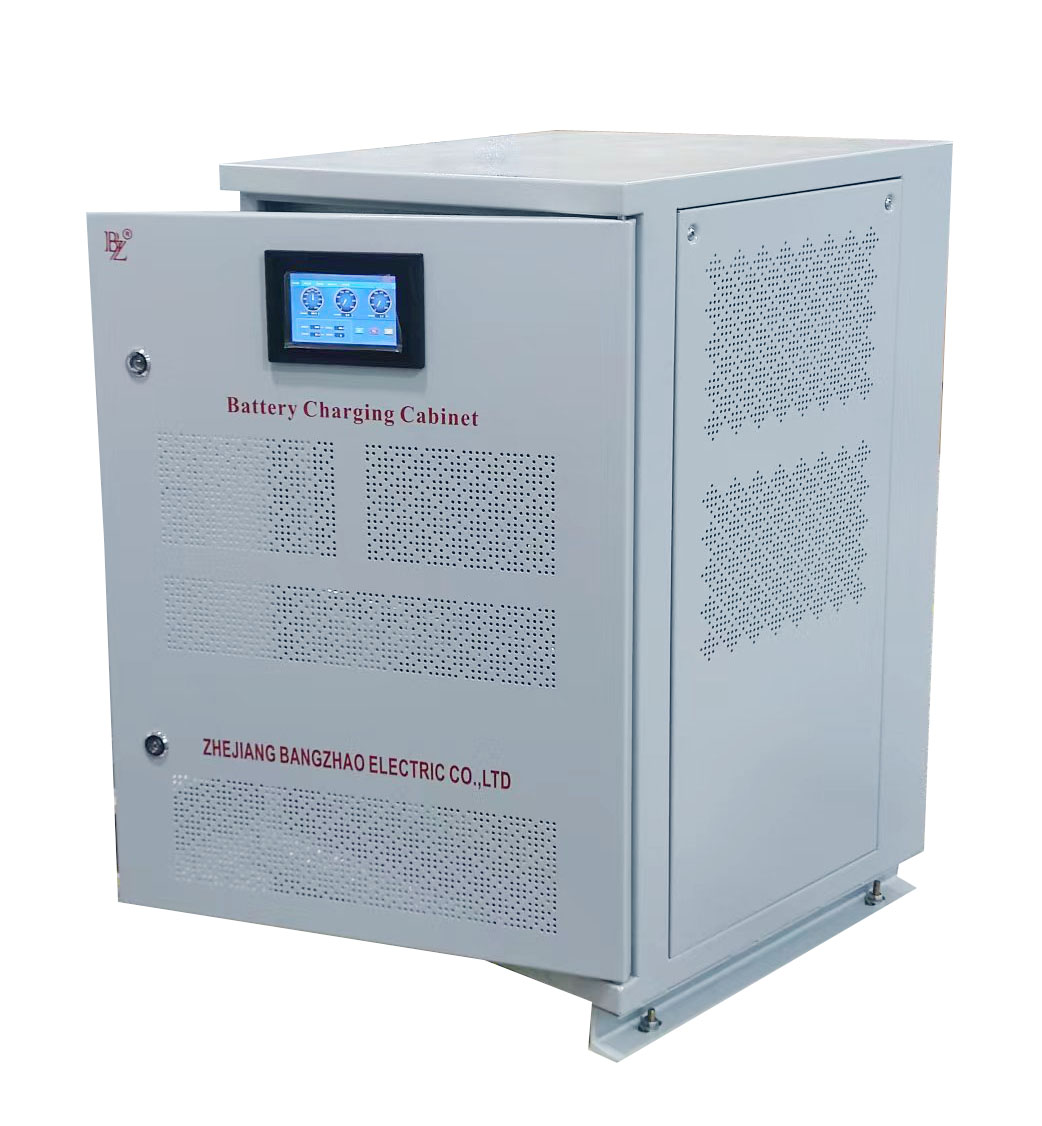
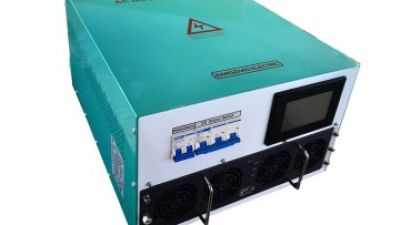
The advent of Constant Current Constant Power (CCCP) rapid chargers has revolutionized the way we approach charging applications, offering an exceptional level of adaptability and efficiency. These chargers are designed to handle a wide voltage range, accommodating inputs from 260 to 530VAC and deliver outputs ranging from 50 to 1000VDC. This versatility makes them ideal for various industries, including electric vehicles, renewable energy storage systems, and industrial applications where different voltage requirements may exist.
One of the greatest benefits of CCCP rapid chargers is their ability to provide consistent power delivery regardless of the load conditions. This feature ensures that devices receiving the charge are getting the optimal current, which not only speeds up the charging process but also enhances the longevity of batteries. Additionally, these chargers are equipped with advanced safety features to prevent overcharging and overheating, making them a reliable choice for critical applications.
Moreover, with their increasing efficiency and performance, CCCP rapid chargers are designed for quick setup and ease of use, allowing businesses and consumers alike to adapt to the fast-evolving energy landscape. As technology advances, these chargers represent a future-ready solution that meets both current and emerging charging needs across various sectors.
FAQS
: Linear power supplies offer stable voltage and are less affected by load changes. Switching supplies are compact and efficient.
Choose linear supplies for sensitive devices, like audio equipment. They provide consistent output but can be bulky.
Switching supplies are smaller and more efficient. They reduce heat generation but may introduce output noise.
Adjustable outputs allow users to change voltage and current levels. This flexibility is essential for different applications.
Programmability can be complex. Many users find it intimidating, and some basic features might overwhelm new users.
Ripple and noise ratings are critical for performance. Low ripple ensures cleaner output, while low noise enhances device reliability.
Aim for a ripple voltage of less than 1%. Supplies below 0.5% greatly improve circuit stability.
High-efficiency ratings mean less energy waste. A rating of at least 90% ensures optimal power delivery and reduces costs.
An intuitive interface makes features easier to use. It helps bridge the gap between user expectations and actual experience.
Reflect on requirements like voltage stability, space constraints, and efficiency. These factors will guide your choice effectively.
Conclusion
Choosing the best DC power supply for your needs involves several key considerations. First, it's essential to understand the basics of DC power supplies and identify your specific power requirements, including the necessary voltage and current specifications. Additionally, evaluating the type of load—whether linear or switching power supplies—helps determine the most suitable option for your application.
Features such as adjustable outputs and programmability can enhance usability, while assessing the quality in terms of ripple, noise, and efficiency ratings ensures reliable performance. Cost is also a significant factor; therefore, balancing budget with performance is crucial. Finally, researching manufacturers and reading product reviews can provide insights into the reliability of different DC power supply options, ultimately guiding you to make an informed decision.